
AI can generate infrastructure changes. It cannot make them safe.

CEO & Co-founder at CloudBooster. 12+ years in cloud infrastructure. Writing about how cloud infrastructure gets built and operated in the AI era.
It's 11pm and the CTO of a six-person startup has a customer waiting on an integration. He opens Cursor, types out what he wants, and in about a minute he's got Terraform, a Helm values file, and an IAM policy he didn't write. It looks fine. He applies it. It works. The customer gets the feature. He goes to bed.
That story ends fine most of the time. But even when it does, something already went wrong. He just can't see it yet.
The pain: the easy half, the hard half
Infrastructure used to have a natural brake. Writing a new service in Terraform took hours, sometimes days, and that friction was the review. By the time you finished you'd read the thing four times and noticed the IAM role was scoped wider than it needed to be. You fixed it before anyone else saw it.
AI took the brake off. A CTO, a product engineer, anyone really, can now produce a working piece of infrastructure faster than they can read it carefully. And the code looks good, because the pattern it's copying was written by someone who knew what they were doing.
But writing the change has always been the easy half. The hard half is deciding whether it's safe to ship. Does this IAM policy give too much away. What does this cost. What happens if this security group change is wrong. Who approved it and on what basis. When it breaks three weeks from now, can anyone figure out why.
None of that got easier. On a lean team most of it isn't happening at all.
When there's no real process between "we want a change" and "it's running in production," teams drift into one of four patterns. These aren't hypotheticals. We've watched this play out across dozens of teams we've consulted for over the last decade:
CTO as bottleneck. The founder owns infra on the side of their actual job. Everything waits on them. Product slows to their bandwidth.
Unsafe AI-generated changes. Engineers use AI to write infrastructure. Nobody's checking it for cost, security, or blast radius before it ships. You find out what it does once it's running.
Too early for a DevOps hire. Four engineers can't justify a dedicated DevOps person, but infrastructure work still somehow eats a day a week out of everyone's calendar.
Consultant dependency. Every non-trivial change needs a contractor. They fix it, they leave, nobody on the team can explain what got done, and you call them again next quarter.
All four are the same failure underneath: there's no reliable process between intent and production. Whatever happens in that gap is improvised.
The consequence: it works until it doesn't
The insidious thing about improvised infrastructure is that it mostly works. You ship fast for six months, nothing blows up, you get comfortable. Then one of these lands on your desk:
A security incident you can't reconstruct. A bucket got opened, or an IAM role got over-scoped, and it traces back to a change from three months ago that nobody remembers making. IBM's 2025 breach report pegs the average breach at $4.44M and attributes 26% of them to human configuration error, which is a polite way of saying somebody merged something they shouldn't have.
Or an enterprise deal that stalls on compliance. The customer asks for your change management process and you've got Git history, CloudTrail, and a Slack channel. That's not a process. The deal slips a quarter while you build one.
Or a 2am incident where "what changed recently" takes half the night to answer, because the last few days of changes came from two AI-generated PRs, one console hotfix, and a Terraform run someone did on their laptop. Good luck.
Or the quieter one: cost. Resources get provisioned and forgotten. Nobody owns the bill enough to notice a $2,000/month line item that shouldn't be there. You spot it when runway gets tight.
None of this shows up on a dashboard. The team looks productive right until the moment it doesn't.
The solution: a path, not another tool
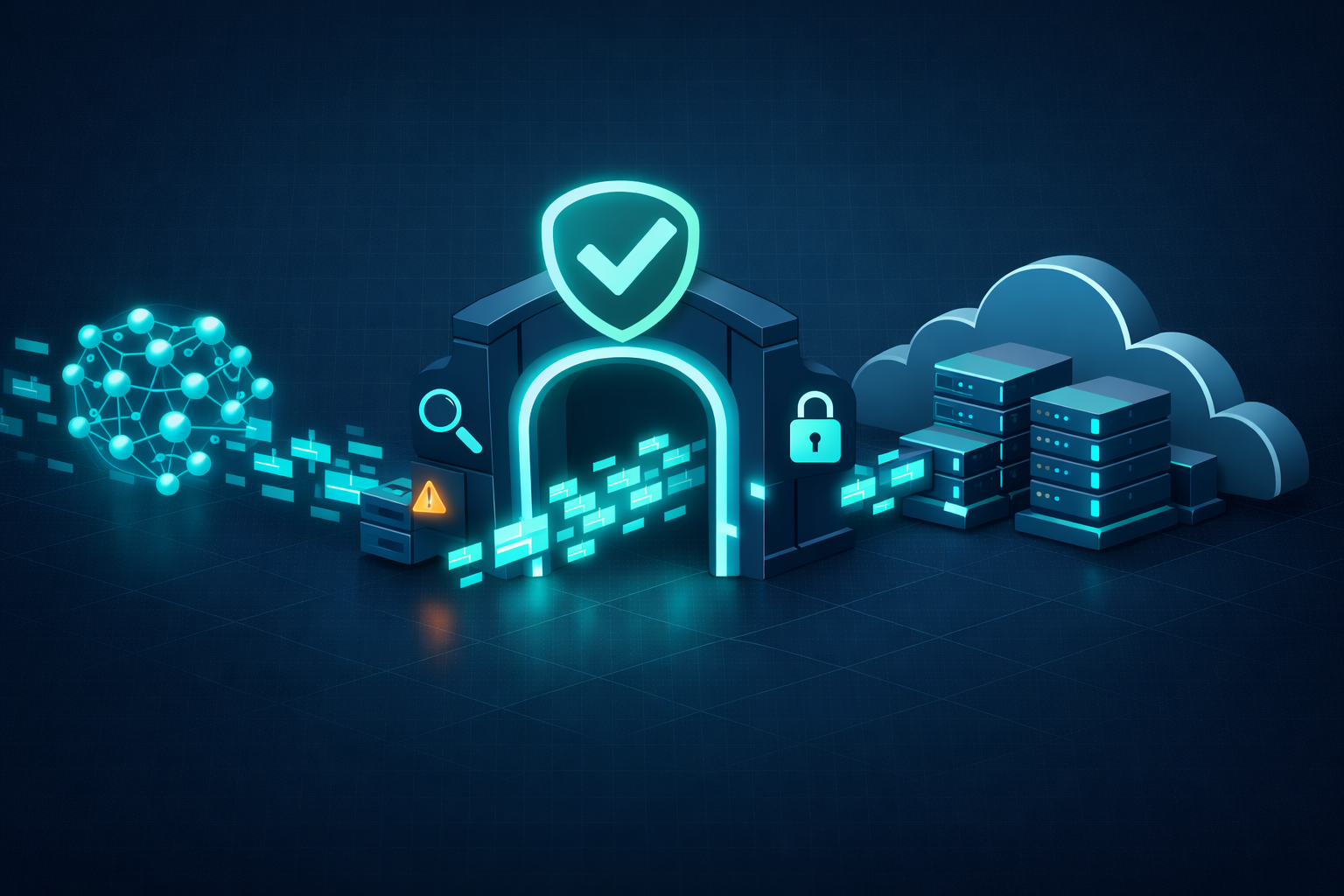
When this starts to hurt, the reflex is to reach for a tool. Atlantis, a policy scanner, a better CI pipeline. Each of those helps with a slice. None of them give a lean team what they actually need, which is one path that every infrastructure change has to go through, whether a human wrote it, AI generated it, or an agent proposed it.
At CloudBooster we call that path a ChangeSet. It has five steps:
- Propose. Describe the change you want, in code or in words.
- Check. Automated validation for security, cost, and blast radius before a human gets involved.
- Approve. Explicit sign-off from someone with context. Solo founder? That's you. Team of five? It's a named approver.
- Apply. Controlled rollout into your AWS account. BYOA. Your workloads never leave it.
- Record. Who proposed, what the checks found, who approved, what changed, what the state is now. Evidence that exists whether or not anyone remembered to write it down.
The word that matters in that list is every. AI-generated, hand-written, console edit, 2am hotfix, all of it goes through the same five steps. That's how you stop depending on one person's discipline to keep production upright.
The durable layer isn't the tool that produced the change. It's the governed path between the change and the cloud.
The success: speed without the fragility
Teams on a governed path don't move slower. The CTO stops being the bottleneck, because the process is the bottleneck and the process is quick. AI-generated changes are fine. They get checked before they ship. You don't need to hire DevOps yet, because the governance layer handles what a DevOps hire would mostly be doing for the first year. Consultants become useful instead of essential.
In practice it looks like this: engineers ship infrastructure in minutes, security and cost issues get caught before apply rather than after an incident, enterprise buyers get the change management evidence they ask for because it already exists, and when something does break, "what changed" is a query you run in thirty seconds.
Closing thought
AI didn't break cloud ops. It exposed something that was already brittle on lean teams. Infrastructure work held together by the discipline of one or two people, which works fine right up until AI lets everyone make changes faster than those one or two people can keep up with.
Writing the change is solved. Making sure it's safe to run isn't. And it's a process problem, not a tooling one. The teams that come out of the next two years in good shape are the ones that built a governed path early, before the breach or the audit or the bottleneck turned into a crisis.
That's what we built CloudBooster for. Lean teams shipping infrastructure on AWS, who want production-grade DevOps without hiring a DevOps team yet. We're running a handful of pilots this quarter. If any of the four patterns up top sounds like your team, come say hi: cloudbooster.io.